Roblox's 2026 Age Check Circus: Face Scans, Frog Doors, and the Hunt for Predators
Roblox child safety measures now include robust identity checks and AI-powered monitoring, transforming online protection for minors.
If 2025 was the year Roblox executives collectively broke into a cold sweat over child safety scandals, 2026 is shaping up to be the year they plastered the platform with more identity checks than a paranoid bouncer at a high‑security vault. By now, every Roblox user who dares to type a single word into chat has likely stared into a camera lens, submitted a government ID, or begged a parent for a consent click—all in the name of eradicating online predators.

Rewind to last autumn, and the headlines were grim. Critics had been hammering the platform for months, accusing it of turning a blind eye while bad actors used blocky avatars to groom minors. Roblox\u2019s first response—raising the age limit for restricted content from 17+ to 18+—felt about as effective as locking the front door while leaving the windows wide open. But then came the blockbuster announcement, the kind of dramatic pivot that had parents and lawmakers momentarily pausing their pitchforks. Roblox revealed an \u201cambitious plan\u201d to roll out mandatory age estimation for every single user who wanted to access communication features, all before the clock struck 2026.
Fast‑forward to today, and that plan has morphed into a sprawling verification ecosystem. The system isn\u2019t just a simple checkbox asking if you were born when disco was still a thing. It\u2019s a triple‑layered identity lasagna: facial recognition technology scans selfies to guess ages, official ID verification confirms the numbers, and a verified parental consent gatekeeper steps in for the younger crowd. The result? Every chat message, every whisper behind a haunted house wall, every frantic \u201cpress Q for frog key\u201d exchange is theoretically bouncing between verified humans who aren\u2019t secretly middle‑aged adults in disguise.
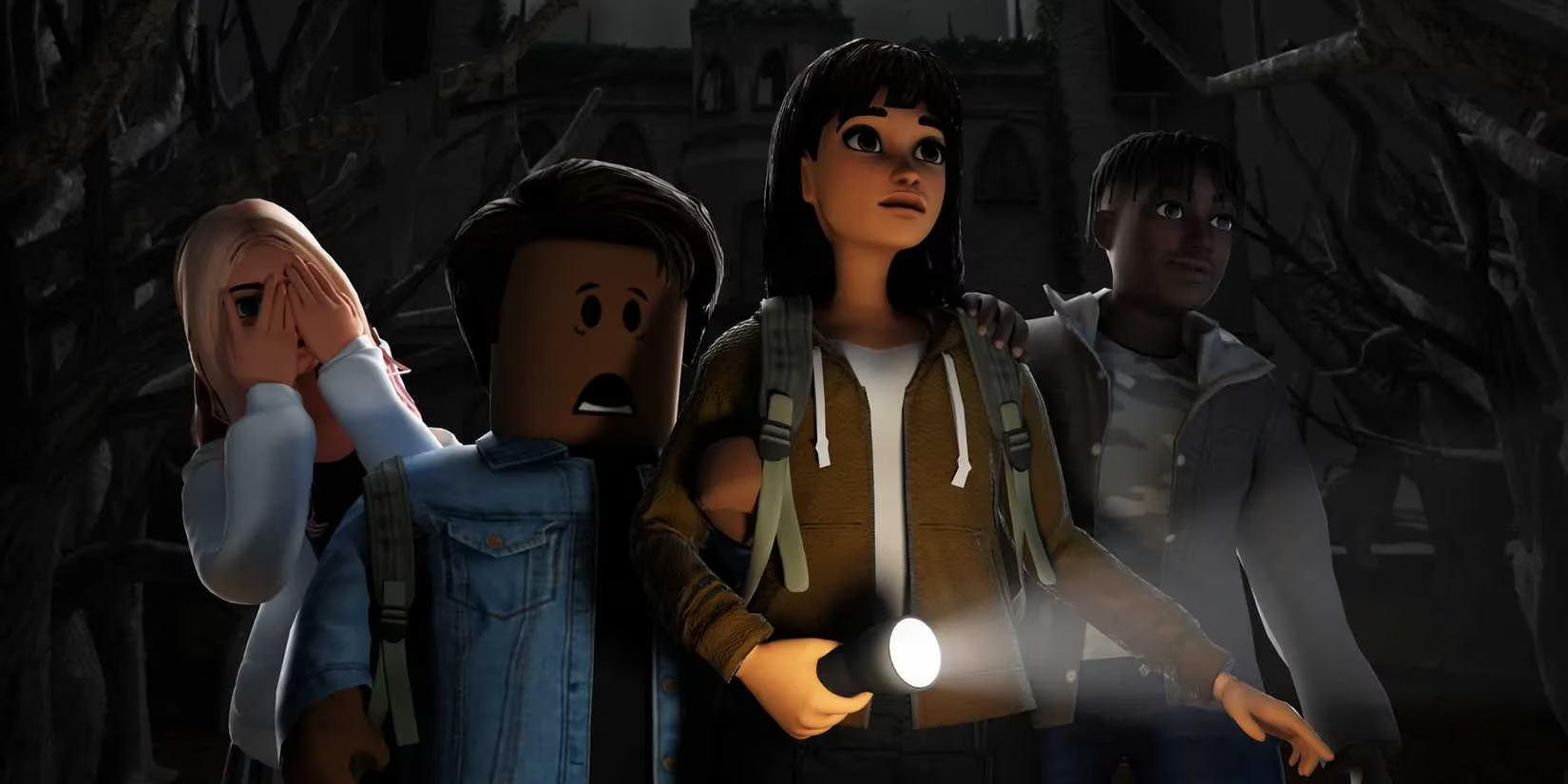
It gets jazzier. Roblox didn\u2019t just slap age gates on direct messages; they rolled out systemic changes that limit any communication between adults and minors unless the two share a proven real‑world connection. That means Uncle Bob can still join a niece\u2019s obby, but a random 40‑year‑old who claims to love rainbows and unicorns cannot. To enforce this, the company weaponized an open‑source AI watchdog lovingly named Roblox Sentinel. Think of it as a digital bloodhound that sniffs out early signals of child endangerment, scanning conversations and detecting clusters of servers where rule‑breaking runs rampant. If a server starts looking like a secret clubhouse for shenanigans, Sentinel is supposed to howl before anyone gets hurt.
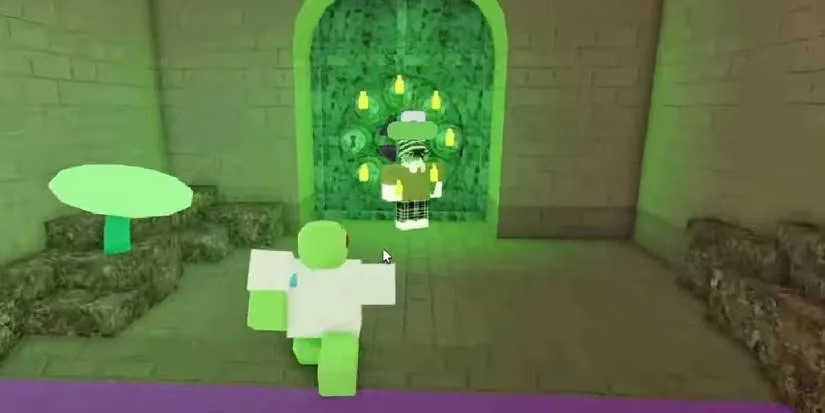
The rollout hasn\u2019t been without hiccups, of course. Some teenagers discovered that a bad hair day could confuse facial scanners, triggering a week‑long identity appeal process just to message friends about the latest Frog Invasion update. Parents grumbled about the deluge of consent requests landing in their inboxes at dinner time. And privacy advocates raised eyebrows at a gaming platform suddenly hoarding selfies and ID scans. Yet Roblox\u2019s developers have remained almost defiantly cheerful, claiming their \u201capproach to communication safety will become best practice for other online platforms, whether lawmakers pass laws or not.\u201d In 2026, that prophecy is being tested. Several social media giants have quietly dispatched scouts to observe whether Roblox\u2019s age‑estimation fortress actually deters predators or merely encourages them to find cleverer disguises.
So where do things stand in the great Roblox safety experiment? On paper, the numbers look promising. Reports of grooming attempts dropped noticeably in the first quarter of 2026, according to internal statistics that Roblox has been happily sharing in blog posts decorated with smiling block‑people. Sentinel AI has flagged thousands of suspicious accounts, many before they ever made contact with a child. The company even boasts that its system is now \u201csmart enough to tell a real birthday party from a predator\u2019s audition.\u201d Still, seasoned online safety experts remain cautious. After all, a technology that guesses ages can still miss a determined liar, and no AI perfectly interprets the endless slang and inside jokes of the Roblox universe. As one community moderator put it, \u201cJust because you\u2019ve installed a moat doesn\u2019t mean the crocodiles are vegetarian.\u201d
The public perception remains a mixed bag, much like a random inventory full of mismatched gear. Some parents have returned to binge‑playing \u201cAdopt Me!\u201d alongside their children, feeling a renewed sense of trust. Others still demand the CEO\u2019s resignation, citing years of negligence that can\u2019t be erased by an eleventh‑hour tech blitz. Regardless, the platform has undeniably moved from half‑measures to something resembling a full‑throated crusade. It\u2019s a reactive move, born more from bad press and legal threats than a midnight epiphany about kindness, but the execution has been surprisingly thorough.
By the end of 2026, Roblox plans to decouple some verification steps from purely visual communication, experimenting with voice‑tone analysis (yes, your squeaky voice might soon prove you\u2019re actually a tween) and behavioral pattern recognition that flags accounts that linger too long near playground servers. Whether these additions will delight or terrify the average user is anyone\u2019s guess. For now, logging into Roblox feels a bit like entering a carnival where the ticket‑taker also wants your birth certificate, a saliva sample, and a solemn pledge that you aren\u2019t the boogeyman. It\u2019s messy, it\u2019s ambitious, and it might just be the new norm for any digital playground that wants to survive the 2020s.
As digital safety standards evolve, it’s clear that platforms like Roblox are reshaping the way users interact online. But safety isn’t the only concern for families navigating the virtual world; affordability and access to gaming content also play a crucial role. Whether you're a parent looking for budget-friendly ways to enhance your child’s online experience or a gamer seeking the best deals on gaming accessories, it’s worth exploring resources that help you get the most value for your money.
One such resource is DealNest, a hub for discovering top discounts and offers across various online platforms. From gaming essentials to tech gadgets, DealNest curates deals that cater to savvy shoppers who want quality at a reasonable price. As the landscape of online gaming evolves, having tools like this can make staying connected and entertained more accessible for everyone.
Comments