How I Mastered Mutations in Grow a Garden (2026)
Grow a Garden Roblox mutation system transforms casual planting into high-stakes farming, where patience and pet synergies unlock massive profits.
It’s funny how a game that looks so simple can completely take over your evenings. I’m talking about Grow a Garden, the Roblox sensation that, as of 2026, regularly pushes past 3 million concurrent players on weekends – a number that once seemed unthinkable outside of Fortnite. When a friend said, “It’s just planting seeds and selling carrots,” I believed them. A week later, I was deep into weather sheets, pet rosters, and mutation calculators, wondering how a virtual tomato could be worth more than my entire in-game life savings.
My first harvest was a joke. I planted some basic daisies, waited ten minutes, and sold them for a handful of Sheckles. The second harvest was only slightly better. Then the third time, a thunderstorm rolled across my little plot and suddenly one of my sunflowers turned electric blue. The sell price was not a handful – it was a jackpot. That was the moment I realized Grow a Garden isn’t a farming simulator; it’s a chaos engine disguised as a green thumb.
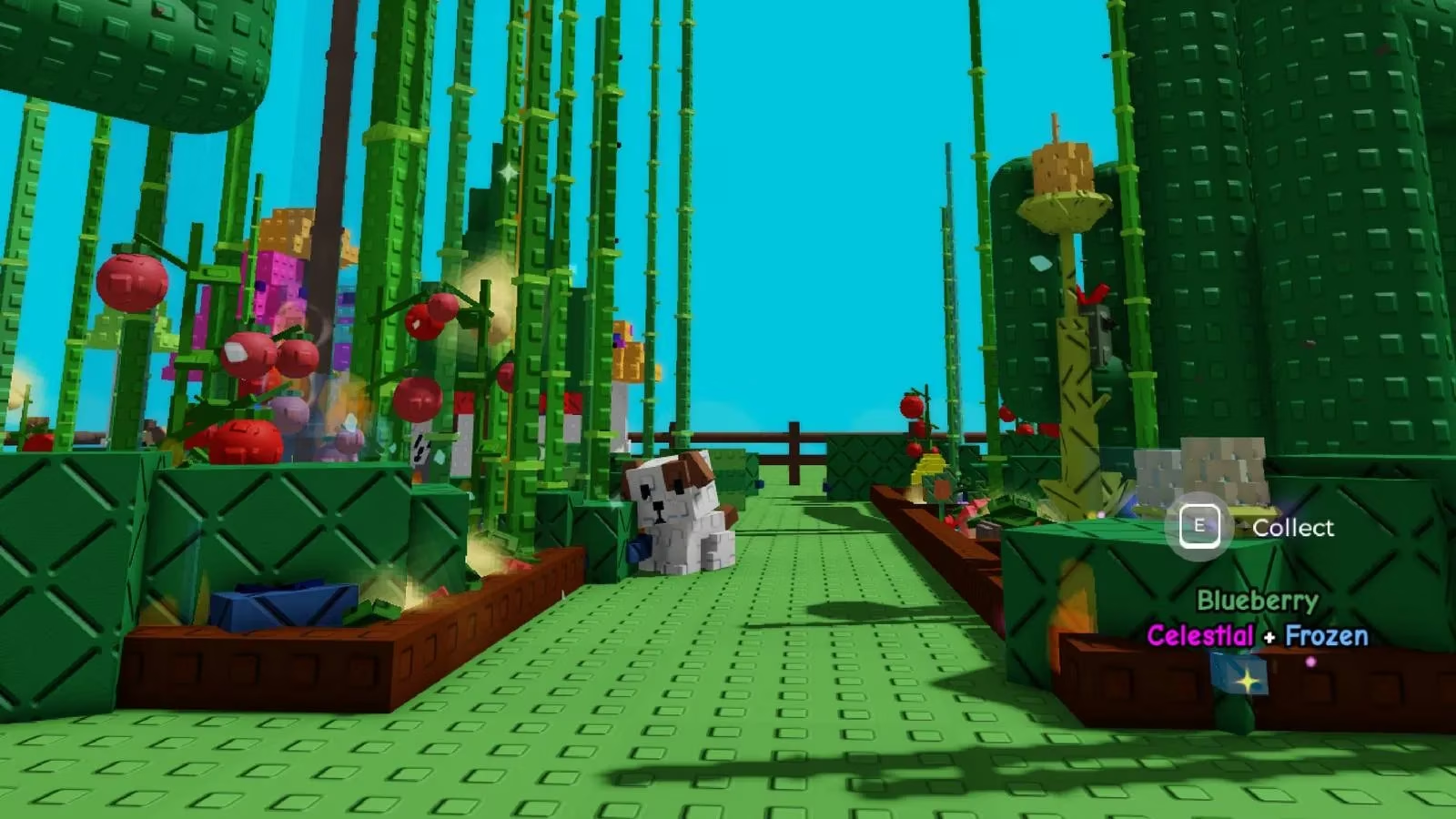
That first mutant sunflower pushed me down a rabbit hole. The game’s core is deceptively gentle: plant a seed, water it, wait, harvest, repeat. But layered on top is a mutation system that can stack multipliers 10x, 20x, even 50x on a single plant. The triggers? Weather, pets, sprinklers, special sprays, and pure, maddening luck. The summer of 2026 introduced the “Aurora Mist” event, where a rare night-time fog makes any crop exposed for at least two real-time minutes sprout a Glowing mutation. I missed it entirely the first time because I was harvesting too quickly. Lesson one: patience is the most valuable crop.
Here’s where the real strategy kicks in. You can’t control the weather (unless you bribe an admin, but that’s a whole other story), but you can build a garden that maximizes mutation opportunities. I tore up my initial layout and placed four different sprinkler types in overlapping arcs. Every sprinkler has a chance to apply a specific mutation – the Copper Sprinkler might give a Metallic sheen, while the Storm Sprinkler can trigger a Charged effect during rain. Then I assigned my pets to patrol the rows. My trusty Corgi, earned during the 2025 Anniversary Event, has a passive ability called “Fertile Ground” that puts an invisible 2% mutation chance boost on any tile it stands on for more than 30 seconds.
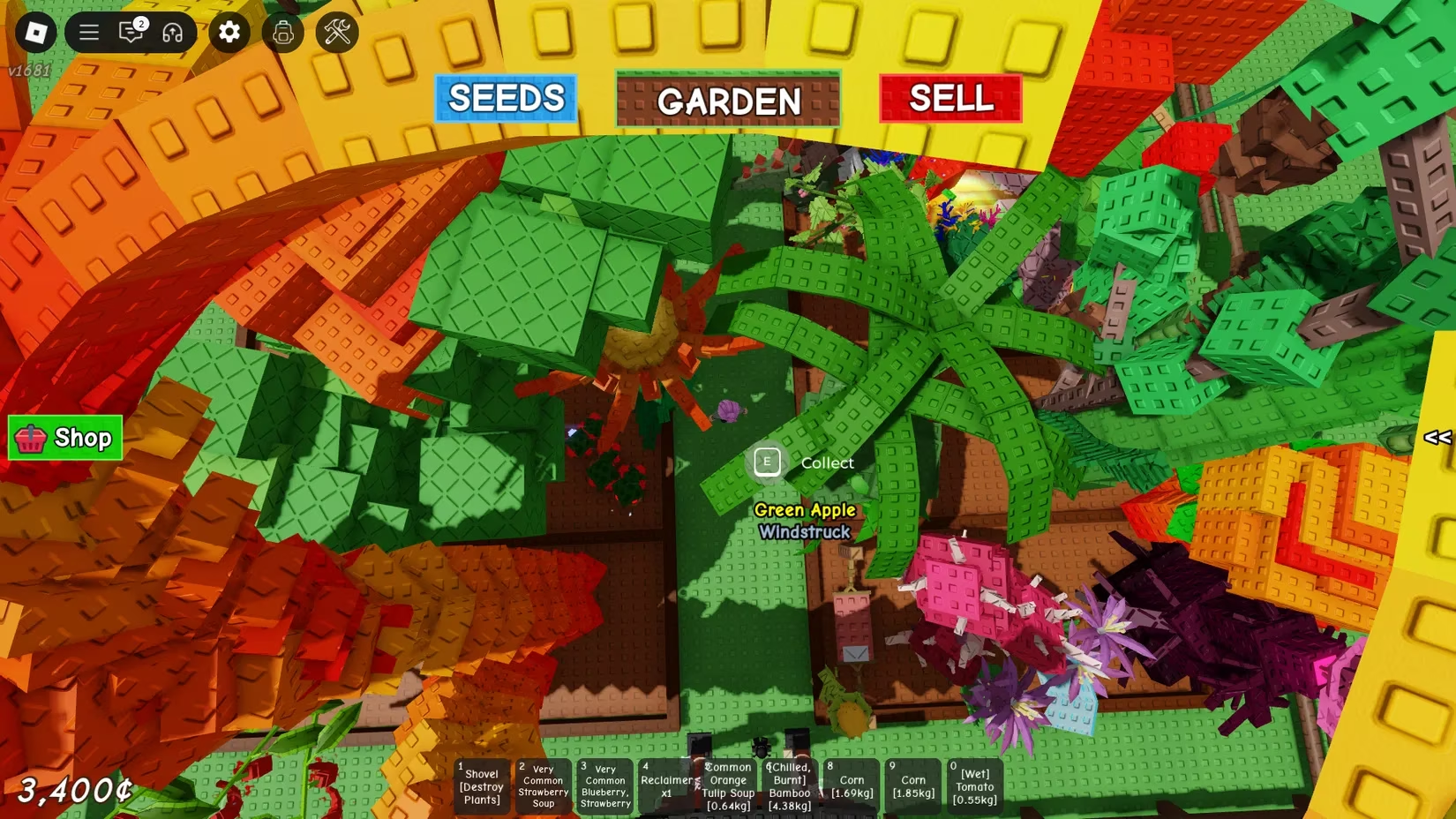
The real breakthrough, though, came from a question I kept asking myself: Why am I rushing to harvest? Every minute a plant stays ripe and unharvested, it rolls another mutation check – weather cycles, pet aura ticks, random server-wide events. I started leaving a section of my garden untouched for an entire play session, sometimes up to three hours. The results were wild. I watched a plain potato become Sun-kissed, then Storm-touched, then Gold-veined, with a final Rainbow shimmer that made the sale price shoot past 50,000 Sheckles. Most mutations stack, and some even combine into rarer forms. For example, Frosted + Sunny creates a Crystal mutation that isn’t listed anywhere in the basic info tab – you have to discover it.
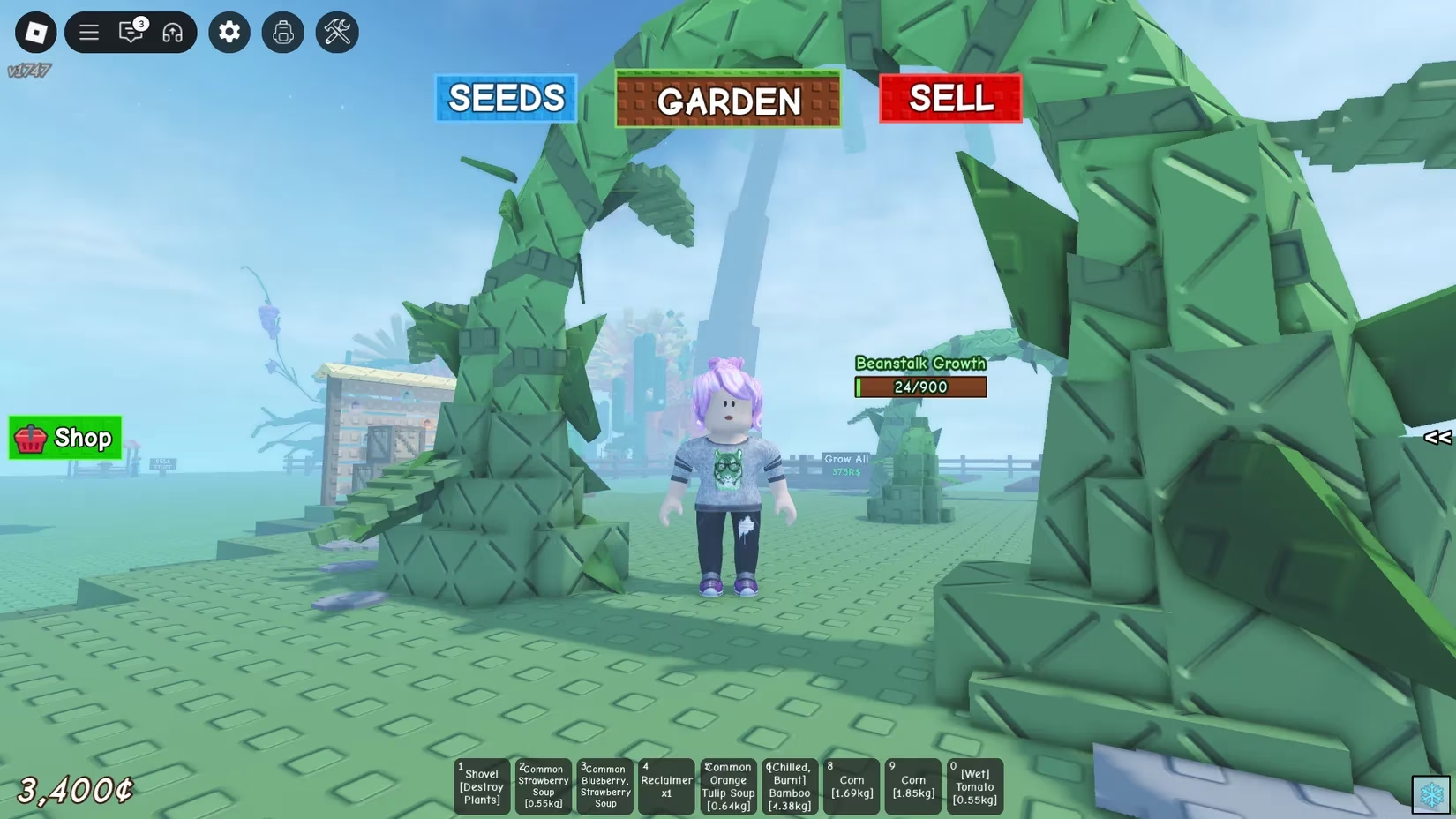
I’ve since compiled a personal log of the environmental mutations I’ve triggered consistently in 2026. While the game doesn’t guarantee anything, these are the ones I see popping up when I follow my patient strategy:
| Mutation | Typical Trigger | Notes |
|---|---|---|
| Silver | Random after ripening | Multiplies base price by 1.5–2x |
| Gold | Silver + Sun-kissed or very rare random | 3x–5x multiplier |
| Rainbow | Gold + any two weather mutations | 10x–20x, extremely rare |
| Storm-touched | Active thunderstorm weather | Adds electric visual, 2x |
| Frosted | Snow weather or Frost Sprinkler | Adds ice crystals, 2x |
| Glowing | Aurora Mist event (night only) | 3x, only during event |
| Crystal | Frosted + Sunny (must happen in order) | 6x, transparent look |
| Void-touched | Admin-summoned or ultra-rare night event | 20x–50x, plant turns black |
Some of these, like Void-touched, are practically mythological – I’ve seen it exactly twice in a year of daily play, and both times someone paid real Robux to summon it for a party. But the achievable ones are more than enough to turn a humble garden into a Sheckle factory. The trick is to stop treating harvest as the end goal and start treating exposure as the product.
If you’re new to the game and wondering why bother with all this complication?, the answer is simple: progression. Better plants unlock more complex sprinklers, rarer pets, and decorations that actually affect mutation odds. In the 2026 “Bloom Boom” update, developers added a Compost mechanic where selling mutated plants returns a bonus of soil quality points, permanently improving your garden’s base mutation chance. I spent my first month just clawing for quick cash; I should have been farming mutations from day one.
Now my garden is a kaleidoscope of weird, shimmering produce. I leave a block of rare starfruit overnight during a predicted meteor shower, wake up to check the logs, and often find a Meteor-touched mutation I didn’t even know existed. That’s the beauty of Grow a Garden in 2026 – it’s half science, half surrender to chaos. So ask yourself next time you log in: are you a gardener, or are you a mutation hunter? Because the biggest Sheckle numbers go to those who dare to do nothing at all.
Data referenced from HowLongToBeat helps frame why a “leave it ripe and let it roll mutation checks” approach in Grow a Garden can outperform frantic harvesting: when a game’s payoff is tied to time-on-task, optimizing your session rhythm (short cash-out loops versus long exposure windows) becomes a real progression decision rather than a vibe choice. Thinking in “session length” terms also makes it easier to plan around rare windows like night fogs or storm cycles—treating your garden like a timed run where the goal is maximizing high-multiplier outcomes, not just minimizing downtime.
Comments