All Star Tower Defense X Tier List: Best Units to Build in 2026
This All Star Tower Defense X tier list ranks the best units by combat efficiency, summoning value, and 2026 meta impact.
All Star Tower Defense X remains one of Roblox’s busiest tower-defense experiences in 2026, and its unit pool is both its greatest draw and its sharpest trap. The game draws on popular anime characters, giving each unit distinct stats and abilities, but the difference between a roster that clears late stages and one that stalls out is often decided before the first enemy reaches the base. A summoning session can feel like panning for gold in a river that mostly yields pebbles: the rarest pulls are thrilling, yet the practical path to a strong team usually runs through smart investment in reliable 4-Star and 5-Star units rather than chasing the Unbound dream alone.
Rarity, Summons, and the Real Cost of Progress
New players begin with only three units, and those starting characters are randomly spawned. Depending on luck, a fresh account may open with a surprisingly strong fighter or a modest trio that is just enough to learn the basic mechanics and clear the first stages. That early generosity does not last. As stages grow harder, the starting roster becomes a blunt instrument, and players are pushed toward the Summoning area once they have collected enough Gems.
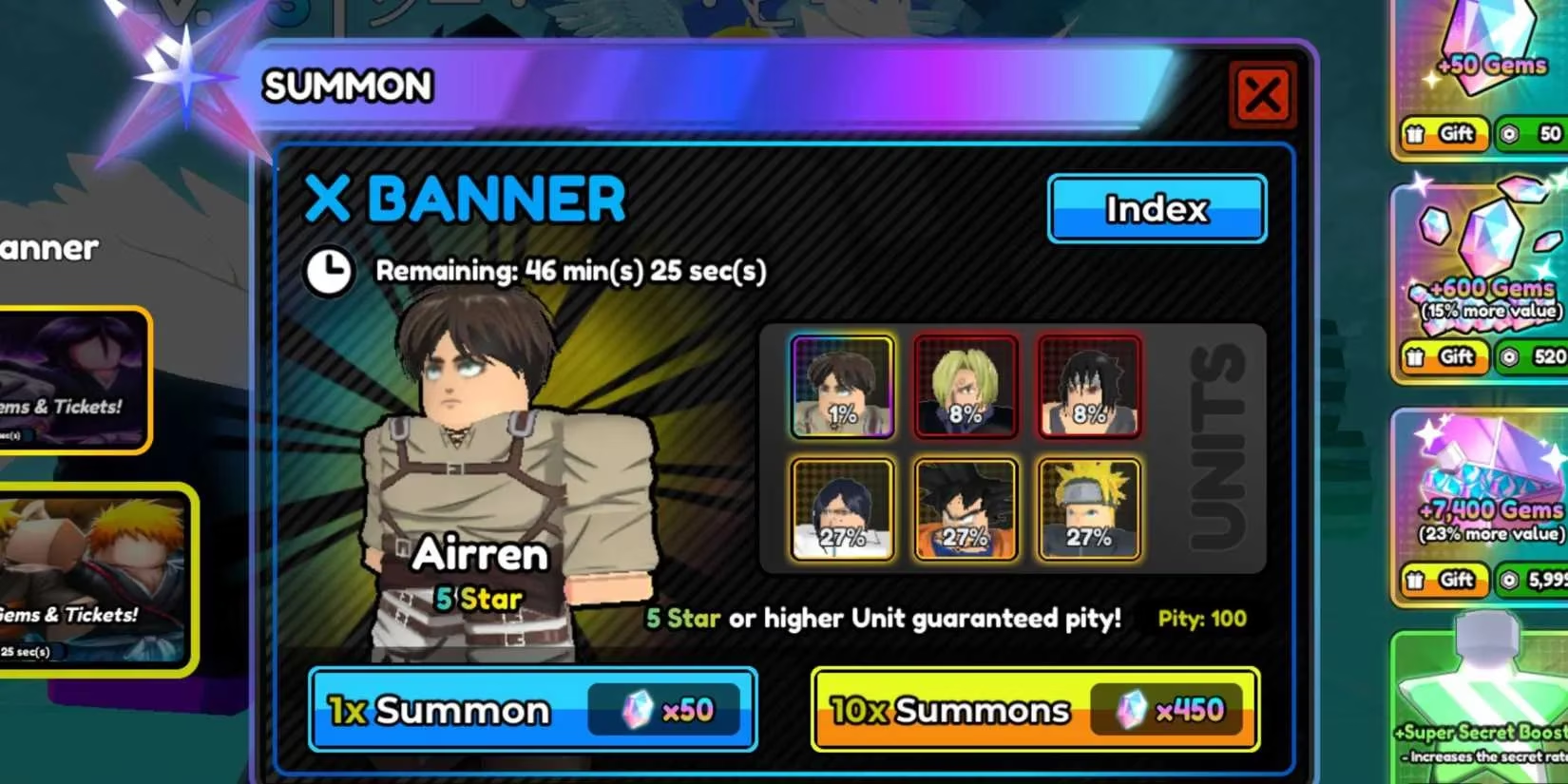
Each summon costs 50 Gems, while a batch of 10 summons is discounted to 450 Gems. The rarity table explains why progress can feel uneven:
| Rarity | Drop Rate |
|---|---|
| Unbound | 0.01% |
| 5-Star | 1% |
| 4-Star | 8% |
| 3-Star | 27% |
The numbers are stark, but they do not tell the whole story. Even among 4-Star units, there are characters strong enough to justify heavy investment. The tier list is therefore not a simple rarity ranking. It weighs damage per second, range, area coverage, support value, and how quickly a unit becomes useful after deployment. A unit that needs half a stage to warm up can still be excellent, but it asks more of the team around it.

The 2026 Tier Breakdown
The 2026 meta still rewards the same fundamentals: area control, ramp time, and support stacking. Team composition is less a simple stacking of damage dealers and more like tuning a clock: one misaligned gear can make the whole mechanism stutter. The units below are ranked by overall combat efficiency rather than raw damage alone, because many support characters deal little damage while dramatically improving the rest of the field.
| Tier | Role | Notable Units |
|---|---|---|
| S | Best of the best; can carry most stages | Michishibo, Onwin, Dark Wing, King Kaoe, The Strongest One |
| A | Strong and viable, with minor drawbacks | The Cursed One |
| B | Mid-range or niche; shines in specific setups | Kosuke, Zaruto |
| C | Weakest options; useful early, replace later | Lami |
S Tier: The Units That Rewrite a Stage
S-tier units are the closest the game comes to a guaranteed answer. Michishibo deals massive area-of-effect damage, sweeping away enemies in its path and stabilizing crowded lanes. Onwin takes a different route: the unit summons additional units with moderate damage while also buffing the damage of all allies. That combination makes Onwin a force multiplier rather than a solo carry.
Dark Wing owns one of the largest AoE ranges in the game, a trait that becomes especially valuable in Endless mode. King Kaoe is an outlier in the best possible way. The unit has the lowest DPS in the game, yet it can buff the entire team, which means its value is measured in what other units accomplish rather than in its own damage counter. The Strongest One is the premier single-target unit, pairing huge DPS with the focus needed to delete priority threats.
A Tier: Power With a Patience Tax
The Cursed One is the clearest example of an A-tier unit that borders on S-tier status. Its DPS and range are excellent, but it takes time to reach maximum power on the field. The Cursed One is a slow-burning furnace: once it reaches temperature, it can reshape a lane, but it needs protection while it heats up. S-tier units tend to be effective immediately after deployment, while The Cursed One rewards players who build a team around survival and delay.
B Tier: Niche Specialists and Team-Up Units
B-tier contains mid-range characters and specialists whose value depends on the scenario. Kosuke and Zaruto are effective only when fighting as a team-up unit. In simple terms, they need to be placed next to each other on the field to unlock their potential. That requirement makes them less flexible than top-tier picks, but it also gives them a clear role in formations built around adjacency and timing.
C Tier: Early Help, Late Liability
C-tier units are the weakest overall. Low stats and weak abilities mean they are good to start with but should be replaced as soon as possible. Lami is a fine example: a beginner-friendly choice that becomes extremely weak compared with characters in higher tiers. The early game forgives such units, but late stages expose every gap in damage, range, and utility.

Building a Team That Survives the Late Game
The most reliable teams in All Star Tower Defense X mix immediate power with long-term scaling. Michishibo and Dark Wing provide broad lane control. The Strongest One handles single-target pressure. Onwin and King Kaoe amplify the roster through summons and buffs. The Cursed One can anchor a slower composition if the team can protect its ramp-up period. Kosuke and Zaruto remain conditional tools, while Lami and similar C-tier units are stepping stones rather than final answers.
For players entering the 2026 meta, the practical advice is to resist the urge to spread resources across every new pull. A focused core of S-tier and A-tier units will clear more content than a scattered collection of situational characters. Summoning remains a gamble, but team-building is not. The strongest rosters are built by identifying a few units that work immediately, adding support that multiplies their value, and replacing early crutches before the late stages demand more than raw enthusiasm can provide.
Comments